How to Start the Debt Snowball Method: A Step-by-Step Guide
Everything you need to go from knowing about the debt snowball method to actually using it. A plain, practical guide that gets you from zero to a plan in one sitting.
There is a gap between knowing about the debt snowball method and actually using it.
Most people who research debt payoff strategies understand the concept within a few minutes. List debts smallest to largest. Pay minimums on everything. Attack the smallest one. Roll the payment when it clears. Repeat.
Simple enough. And yet millions of people read about it and never start.
The reason is usually not confusion about the method. It is the moment before the method. The part where you have to sit down, open your statements, and actually write down every single thing you owe. That part feels harder than it should.
This guide is designed to get you through that moment and out the other side with a plan in your hands.
Before you start: what you actually need
You do not need a financial advisor to start the debt snowball. You do not need a special app or a complicated spreadsheet. You need four things.
A list of every debt you carry. Credit cards, store cards, car loans, personal loans, student loans, buy now pay later balances, medical bills, money borrowed from family. Everything except your home loan, which lives in a separate category and is handled differently.
The current balance on each one. Not the original amount you borrowed. The amount you still owe today. Check your most recent statement or log into your account.
The minimum payment for each debt. This is the smallest amount your lender allows you to pay each month without penalty. It will be on your statement.
The interest rate for each debt. Often labelled as APR and shown as a percentage. Check your statement or account page. If you cannot find it, use a rough estimate for now. You can update it later.
That is the complete list. If you have those four things, you have everything you need to start.
Step 1: write everything down in one place
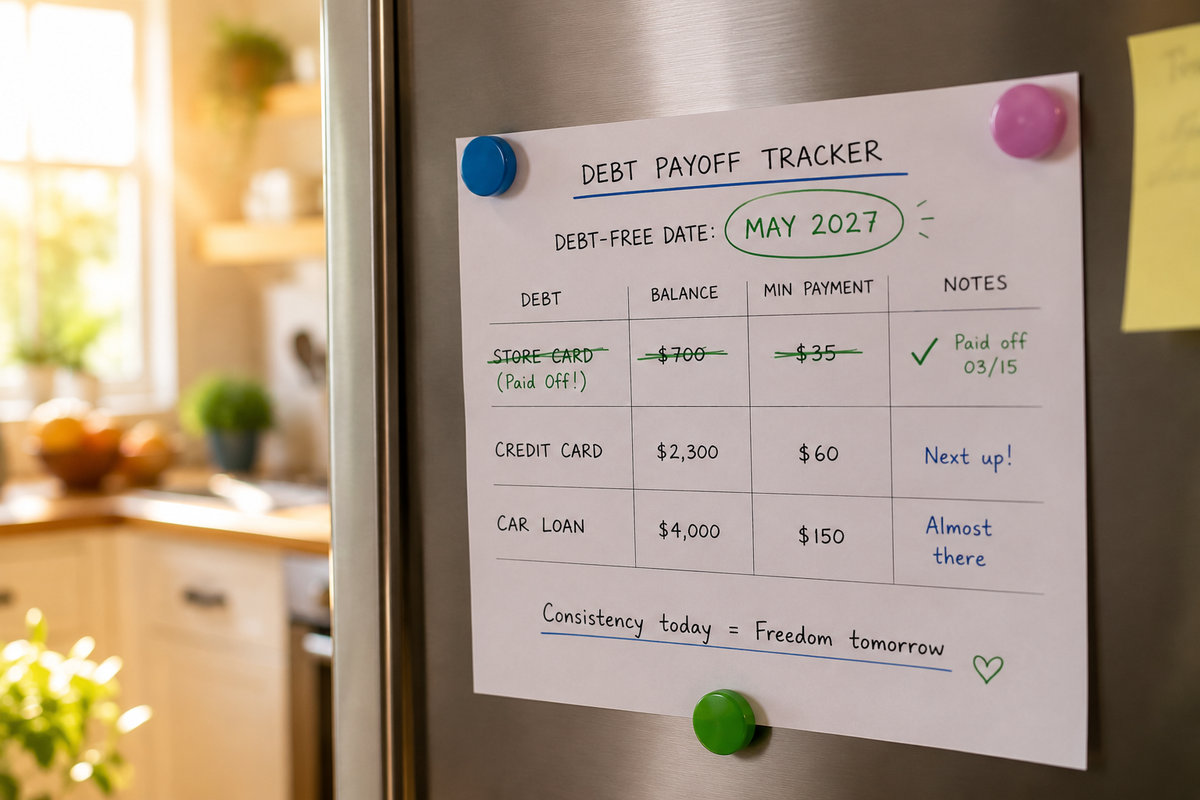
Get every debt out of your head and onto something you can look at. A piece of paper, a note on your phone, a simple spreadsheet. The format does not matter. What matters is that it is all visible in one place for the first time.
Include the name of the debt, the balance, the minimum payment, and the interest rate. Leave nothing out. Include the $200 you owe a friend if that is a real debt. Include the buy now pay later balance if there is one. Complete and honest is the only useful version of this list.
Once you have it written down, look at the total. For most people this moment is uncomfortable. That reaction is healthy. It means the number is finally real rather than a vague background stress.
Step 2: order them from smallest to largest balance
Take your list and reorder it. Smallest balance at the top, largest at the bottom.
Ignore the interest rates when doing this. That feels counterintuitive if you have read anything about the debt avalanche method, where rate is everything. But for the snowball, balance size is the only ordering criterion. You are prioritising momentum over mathematics at this stage.
The debt at the top of your list is your first target. Everything else receives only its minimum payment for now.
Step 3: pay minimums on everything except the top one
This step is non-negotiable.
Every debt on your list must receive at least its minimum payment every month. No exceptions. Missing a payment on any debt creates late fees, hurts your credit, and can trigger penalty interest rates. The discipline here protects the plan.
Do not try to do more than minimums on anything except the debt at the top of your list. Spreading extra money across all your debts feels responsible but it slows progress on every debt without clearing any of them quickly. Focus is what makes the snowball work.
Step 4: find your extra money
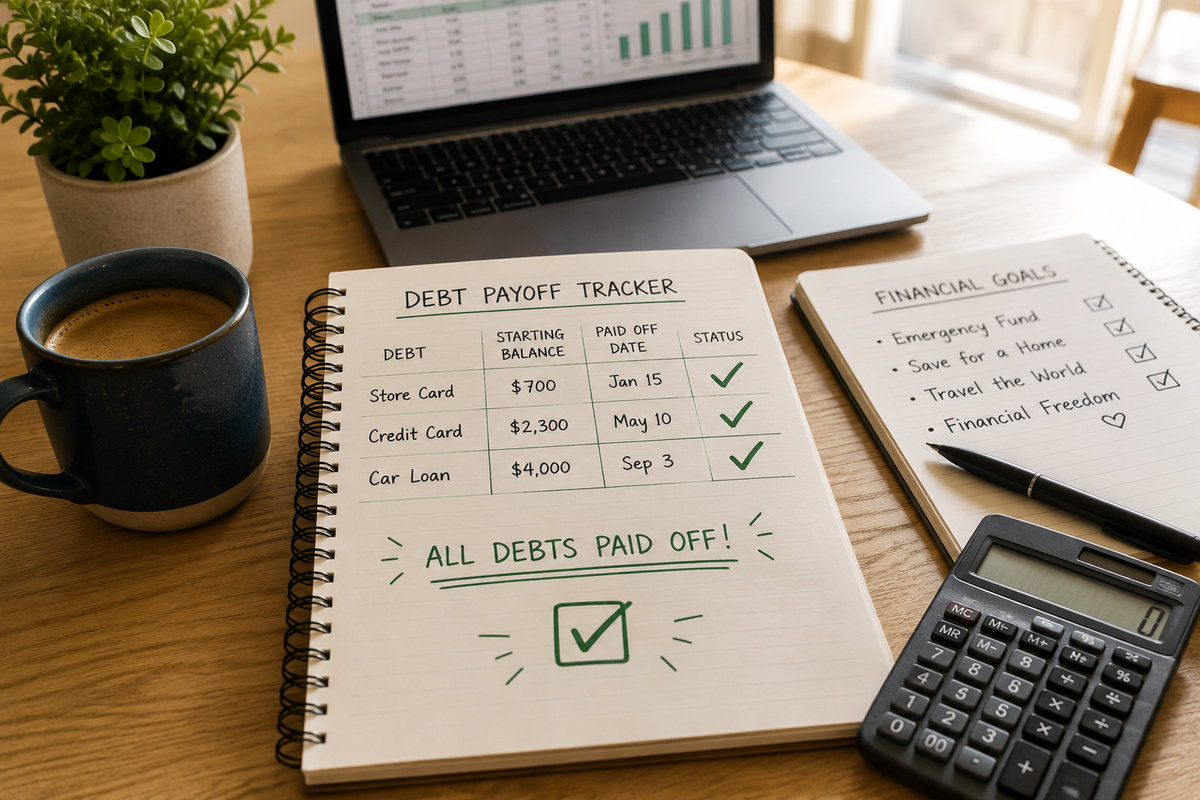
This is the question most people get stuck on. Where does the extra payment come from?
The honest answer is that it is different for everyone, and sometimes it is smaller than you hope. But even small amounts matter. An extra $30 a month on a $500 balance can clear it in a fraction of the time it would take on minimum payments alone.
Start by reviewing your last month of spending. Look for subscriptions you are not using. Meals you did not really need. Purchases that felt like treats but did not actually improve your week. You are not looking for everything. You are looking for something.
If you find $50 extra, that is your snowball starter. If you find $200, even better. Whatever you find, it all goes to the debt at the top of your list.
Step 5: attack the smallest debt with everything you have
Every extra dollar goes to number one on your list. Every month. Without fail.
Some months you will find extra money from an unexpected source. A tax refund. Birthday money. Payment for something you sold. All of it goes to the top debt. You were not counting on it, so you will not miss it. And it can move the balance faster than you expect.
Keep making minimum payments on everything else. Keep throwing the extras at the target. And track the balance as it drops. Watching a number fall is more motivating than almost anything else in this process.
Step 6: roll the payment when a debt clears
This is the step that makes the method work over time.
The moment a debt reaches zero, do not absorb its payment back into your budget. Take every dollar you were paying on it and immediately add it to the payment on the next debt in your list.
If you were paying $200 a month on the first debt and it clears, that $200 does not disappear. It rolls forward. Your next target now receives its minimum payment plus the $200 you just freed up. The payment grows. The progress accelerates. The snowball gets heavier.
Repeat this for every debt that clears, all the way down the list.
Step 7: protect the plan with a small emergency fund
This step often gets left out of debt snowball guides. It is arguably the most important practical one.
Before you go fully aggressive on the first debt, set aside a small emergency buffer. One month of essential expenses is a reasonable target, though even $500 to $1,000 can make a real difference.
The reason is simple. Life does not pause for debt payoff. Car repairs arrive. Medical expenses show up. A household appliance breaks. Without a cushion, any of these events sends you back to a credit card, which can undo weeks of progress and add new debt to the pile.
A buffer absorbs those moments. It keeps the plan intact. And it prevents the very common situation where someone does everything right for three months and then one unexpected expense puts them back where they started.
How long will it take?
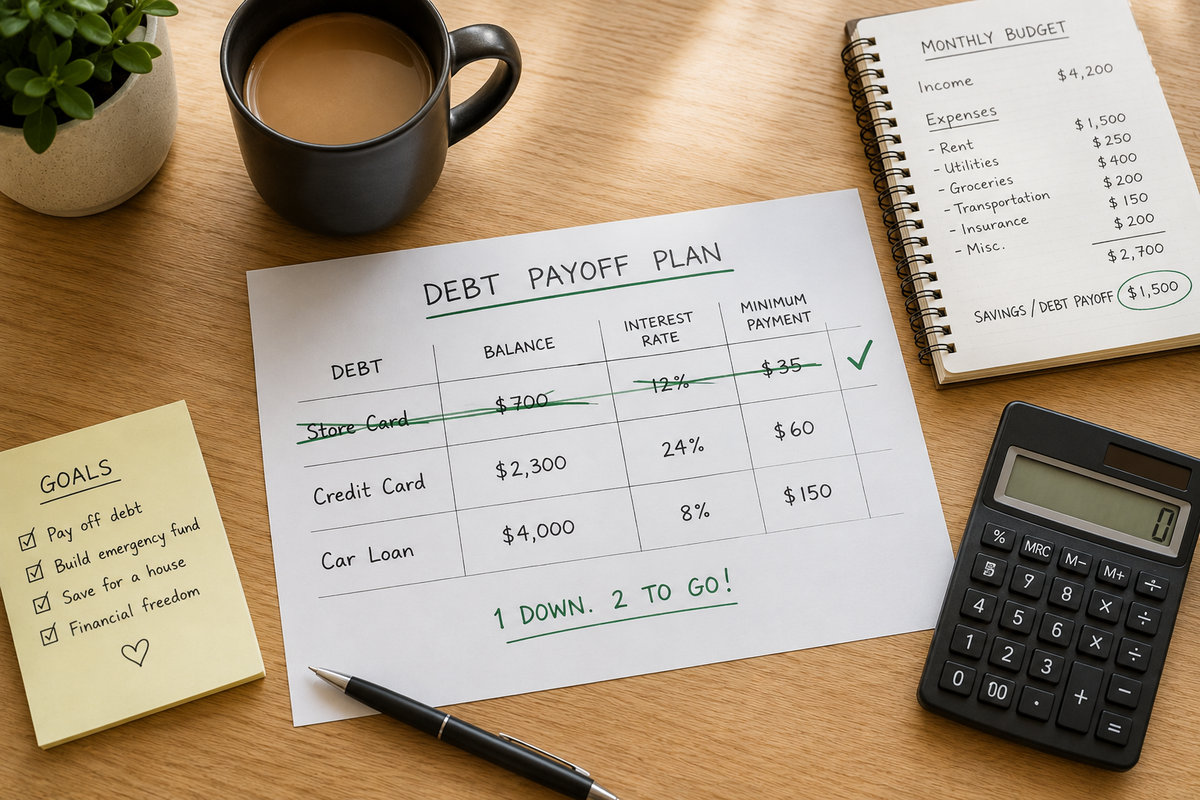
This depends entirely on your total debt, your interest rates, and how much extra you can pay each month. There is no universal answer.
What is universal is the effect of extra payments. Even a modest amount above the minimums can dramatically change your payoff timeline. The free Clearpath tracker can show you your exact debt free date based on your own numbers. That date is usually more motivating than any general estimate could be.
What to do when motivation fades
It will. That is not pessimism. It is just reality. The first few months are exciting. The middle phase is grinding and slow. Motivation fades for almost everyone at some point.
Three things help when it does.
Track your progress in writing. Not in your head. The numbers keep moving even when motivation does not, and seeing them move is often enough to keep going.
Remember why you started. Write it down somewhere you will see it. The number on the other side of this plan. The feeling of not having debt payments leave your account every month. The thing you would do with that money if it were yours again.
Celebrate the small wins. When a debt clears, that is worth acknowledging. Not with expensive spending, obviously. But a moment of recognition. A small reward. Something that marks the progress as real.
Your starting checklist
- Write down every debt: name, balance, minimum payment, interest rate
- Order them from smallest to largest balance
- Set aside a small emergency fund before going all-in
- Make minimum payments on every debt every month
- Send every extra dollar to the smallest debt
- Roll the full payment onto the next debt when one clears
- Track your progress so momentum stays visible
Sources
- Consumer Financial Protection Bureau (CFPB) -- Getting out of debt: practical guidance
- National Foundation for Credit Counseling (NFCC) -- Debt repayment strategies
- Federal Trade Commission (FTC) -- Coping with debt

See your own debt free date
Put your numbers into the free Clearpath tracker and see the exact month you could become debt free, your full payoff order, and how much interest you will save. Nothing is stored anywhere.
Open the free tracker →Get the Debt Payoff Starter Kit
A printable debt tracker, a payoff worksheet, and a 30-day guide. Free to your inbox.
No spam. Leave any time.
This article is for general educational purposes only and does not constitute financial advice. See our full disclaimer.